
How Self-Checkout Does in Fact Work in Southern Africa.
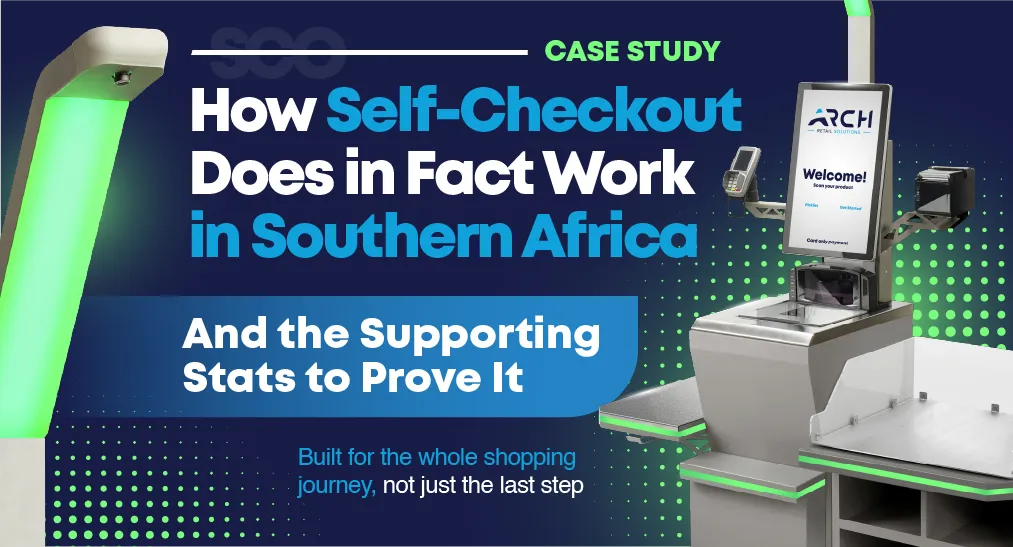
“It will never work here.” That is usually the first thing Southern African retailers tell us, and it is a fair concern when self-checkout (SCO) is treated as an unmanned till. Arch takes a different route: an assisted, weight-verified checkout that gives shoppers independence while keeping store teams informed and involved.
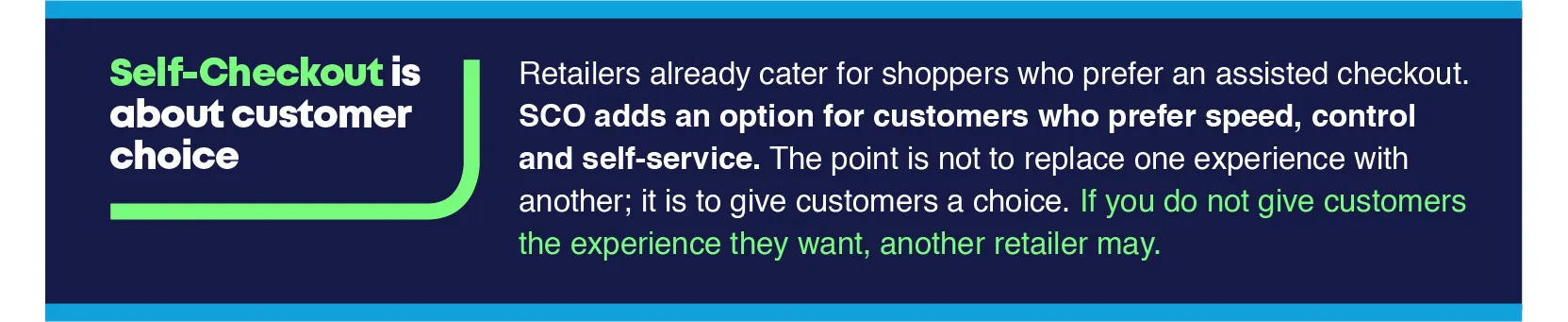
The goal was never to swap a cashier for a screen. It was to redesign the last stage of the shopping trip: a quick, intuitive option for smaller baskets, with sensible checks built in, better use of floor space and more flexible staffing.
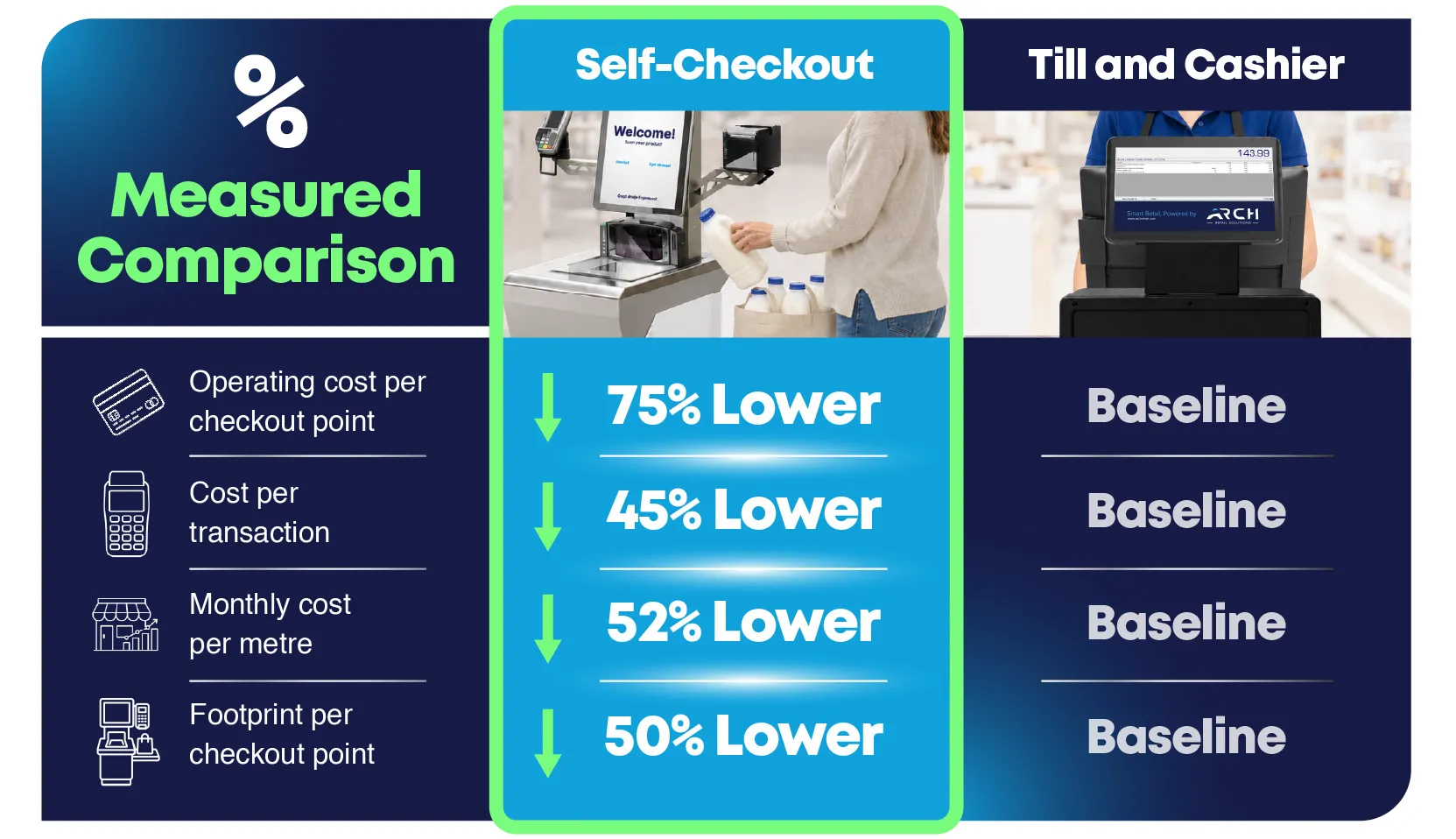
The Results People Ask About First
The studies do not all tell the same story, and that is exactly what makes them useful. Store size, adoption, staffing and layout all shape the outcome.
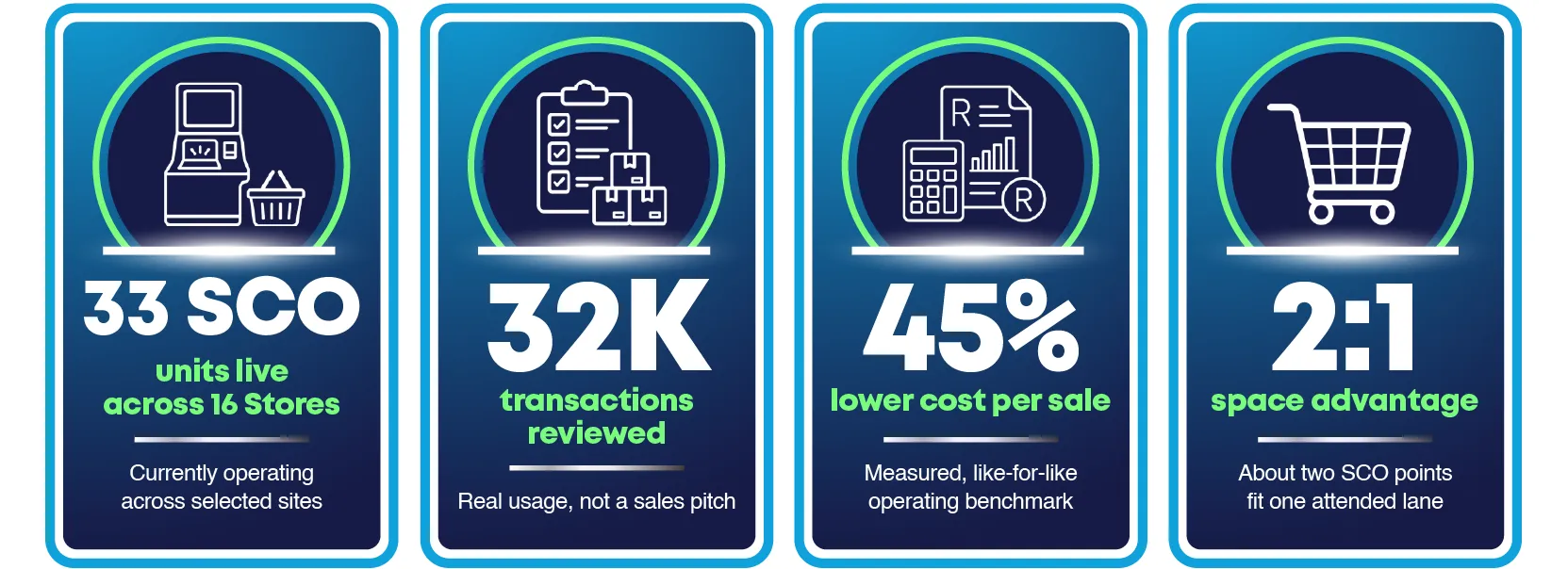
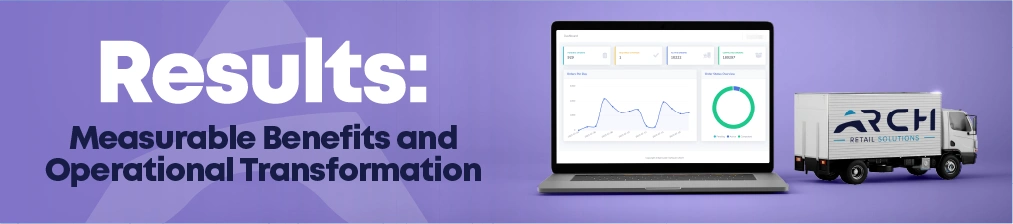
Across selected Southern African sites, more than 32,000 SCO transactions were reviewed. Usage is driven by small basket sizes. In one store, 82% of SCO baskets contained 15 items or fewer.
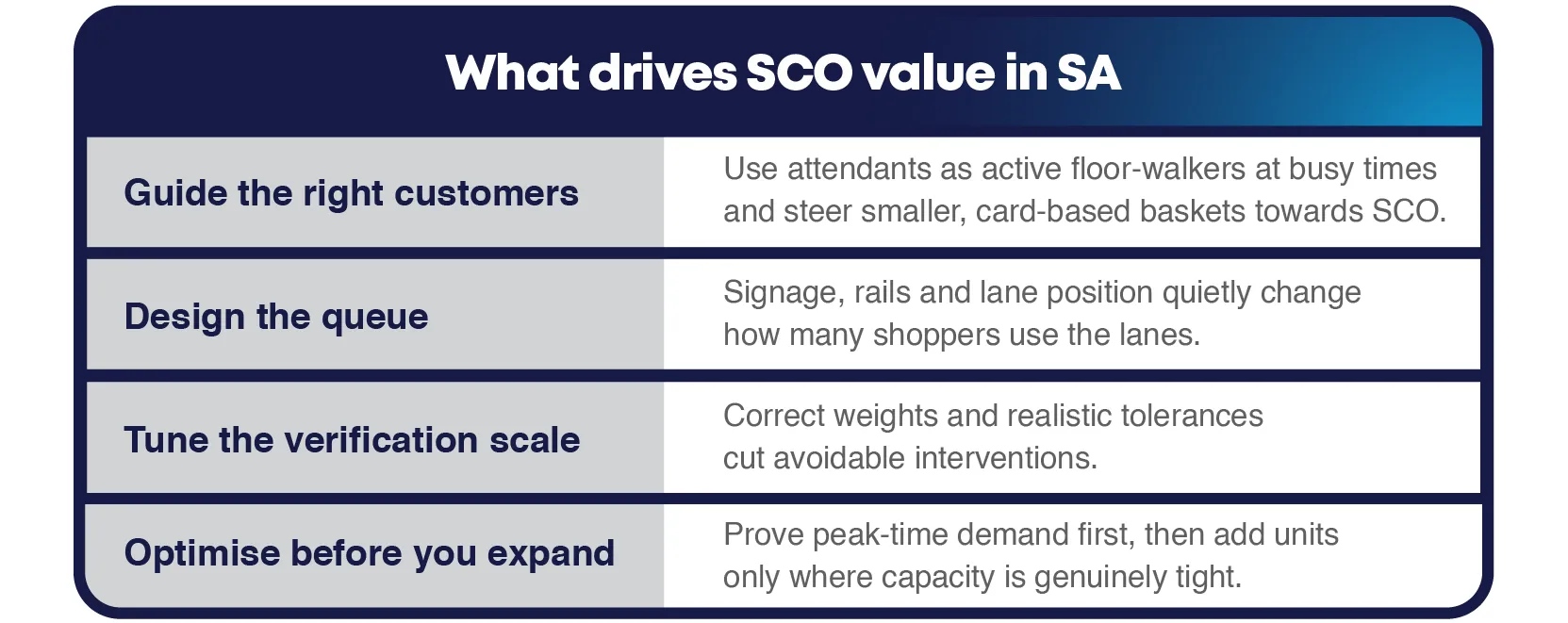
Where adoption and staffing were well matched, some sites reached payback in under eleven months. Where the operating model was still settling in, payback stretched towards two years. The hardware is the same; the difference is how the store runs it.

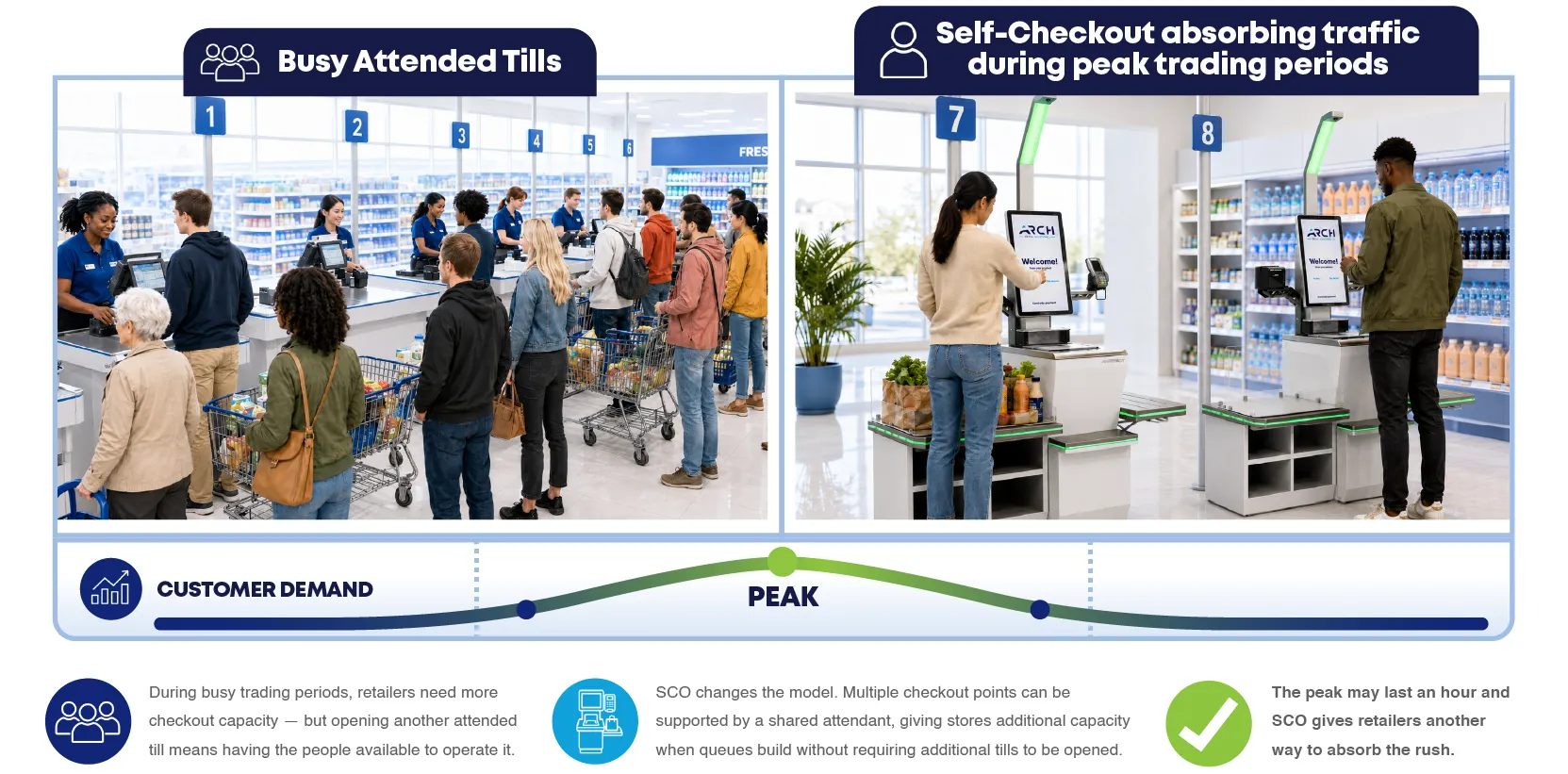
More Capacity when the Rush Hits
Peak demand doesn’t last all day

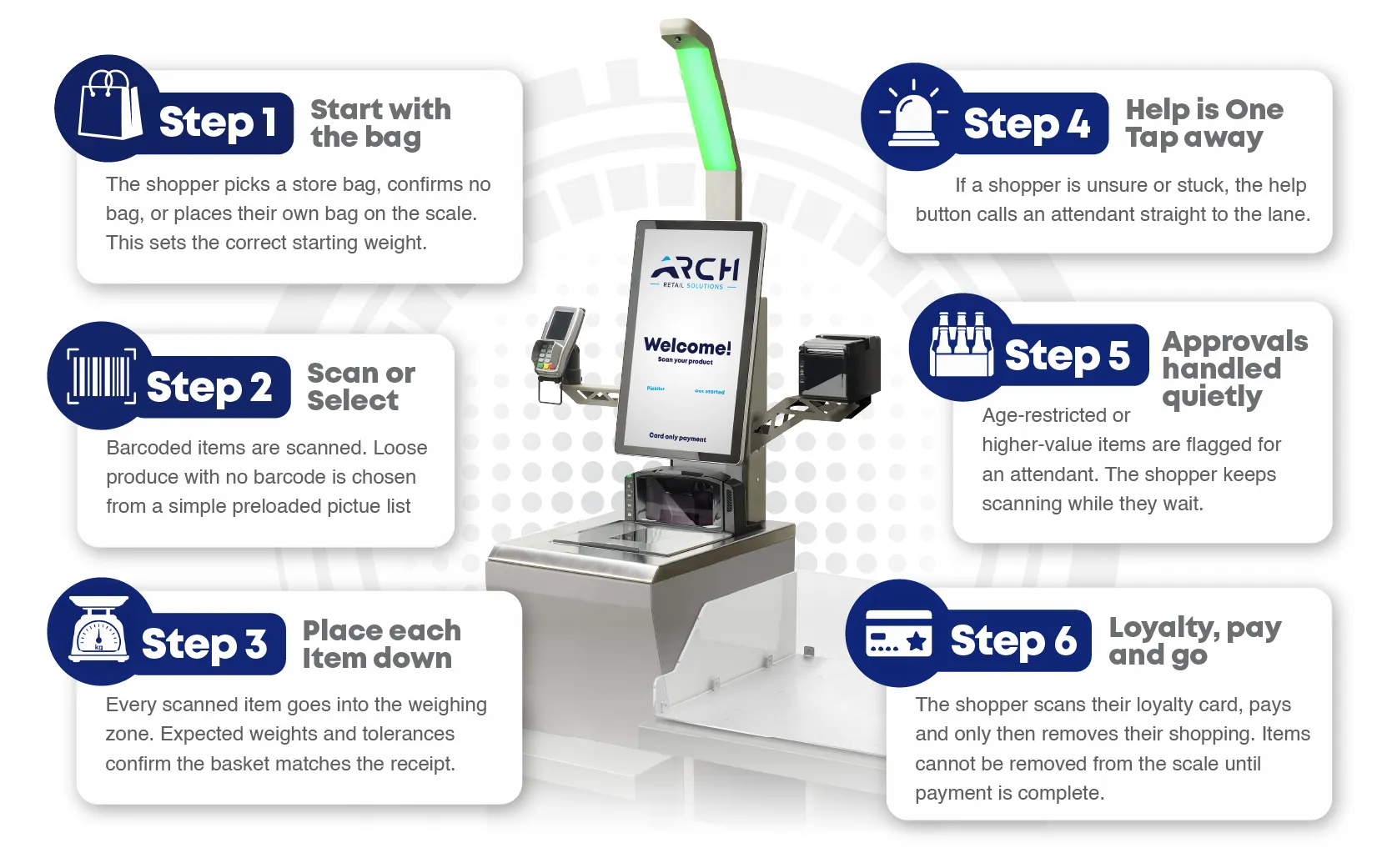
Simple for the shopper. Visible to the store.
The journey is designed to feel natural. The system explains the next step, gives the shopper an easy way to ask for help and quietly verifies each step in the background.
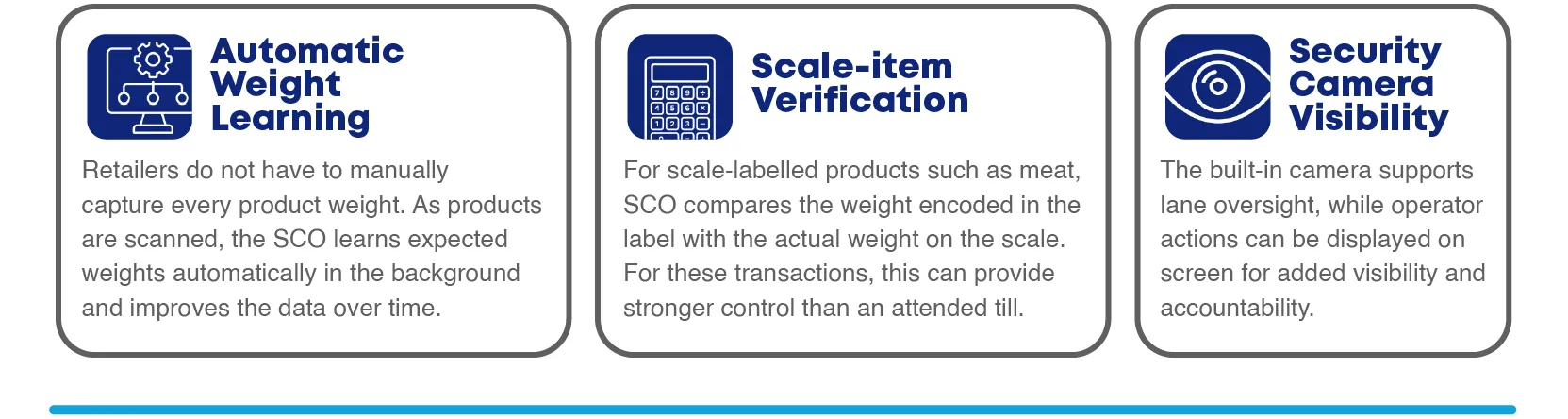
More Control. Less setup.
Three smart controls work quietly in the background.
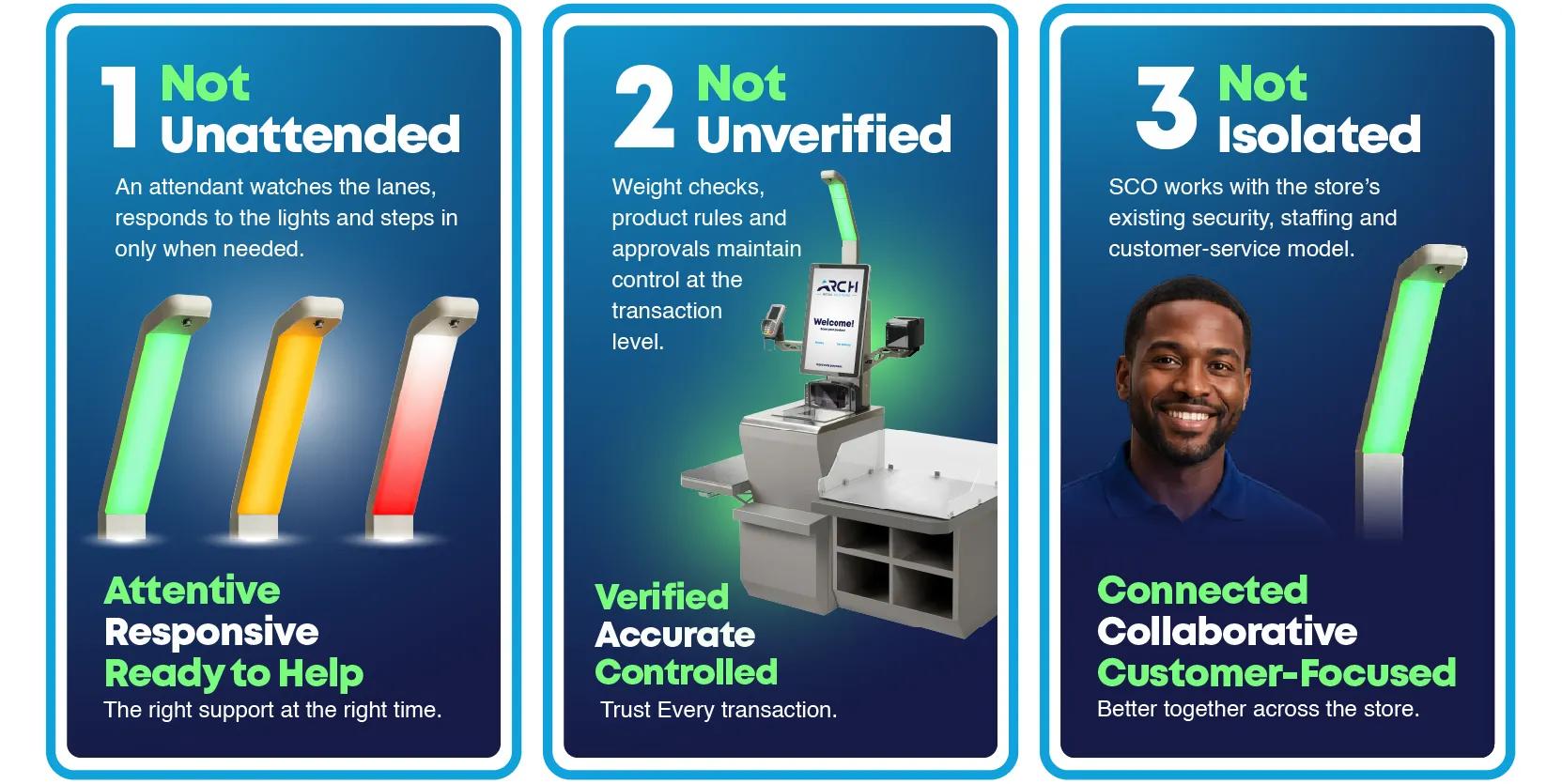
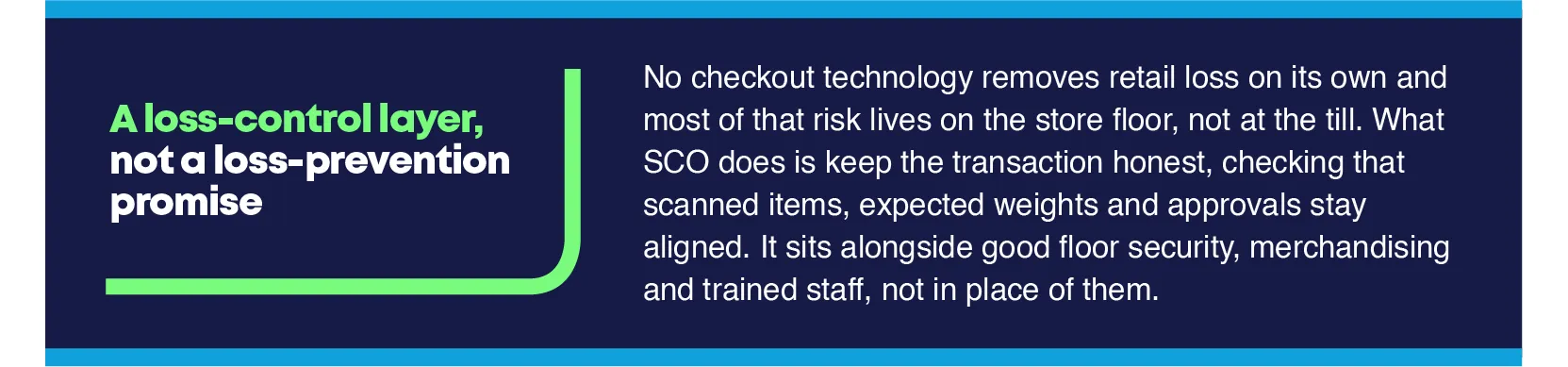
The shopper stays in control and the store stays informed. An unexpected weight change, an item lifted before payment, age-restricted goods or a help request each raise a clear prompt - bloc so one attendant can support several lanes without hovering over anyone.
ERP-agnostic: Designed to work across different systems
Arch SCO is not only for retailers already on Arch Retail Solutions. It is designed to integrate across a wide range of point-of-sale and ERP environments, subject to a technical assessment.
That gives you a way to modernise checkout without first replacing the rest of your technology and a management layer behind the simple shopper screen, where terminals, picklists, weights and intervention trends are all configured centrally.
Start with your store, not a generic model.
A meaningful SCO proposal begins with your data - basket sizes, payment mix, peak periods, current lane footprint, staffing and integration needs. From there we design the right number of units, scale size, attendant model and adoption plan around your customers and operations, not around a one-size-fits-all assumption